
"I Am Silenced"
Anger Behind The Picture-Perfect, Pt. 1

Note: Some names have been changed according to interviewees’ preferences.
It is a summer night on the farm, and the corn stalks are waving in the breeze. Crickets rasp in rhythm. A 14-year-old girl runs from the house, silently - afraid. She slips into the cornfield and stills her breathing, tries to silence her heaving lungs. She is hiding from her father.
Now in her 50s, Louise recalls this moment with clarity: “I heard him coming after me, and I just ran as quiet as I could. And boy, did I learn how to be quiet, you know? You learn how to just be invisible . . . . And he came back the field lane, he was trotting at first, and then I could hear him slow to a walk, and he called my name. I was just terrified. I stayed in the cornfield . . . for a long, long time.”
Louise was accustomed to being spanked with a wooden paddle, so hard that marks were left on her skin. It had become so ordinary, being at the receiving end of her father’s rage didn’t terrify her. But this night, it did. Her body recognized the danger she was in.
“Eventually, I crept back up to the house, and I could see that the basement lights were on, and I could see through the window, I could see that he was down there. So I crept in the back door really quietly, crept to the kitchen, back the hallway to the bathroom, because that was the one door I could lock, and then I could open a closet door against it to leverage it. If he managed to unlock [it] from the outside, I could keep him out. Like, I’d learned this. I’d figured this out in all these altercations.”
Her father comes and knocks at the bathroom door. Louise refuses to open up. She doesn’t remember how the situation ended—patchy memories are a hallmark of trauma. Regardless, the emotions of that evening are vivid in her memory: the searing resolve of her father’s anger and his desire to punish her, and her own responding resolve to hide from that anger, adrenaline and fear propelling her body.
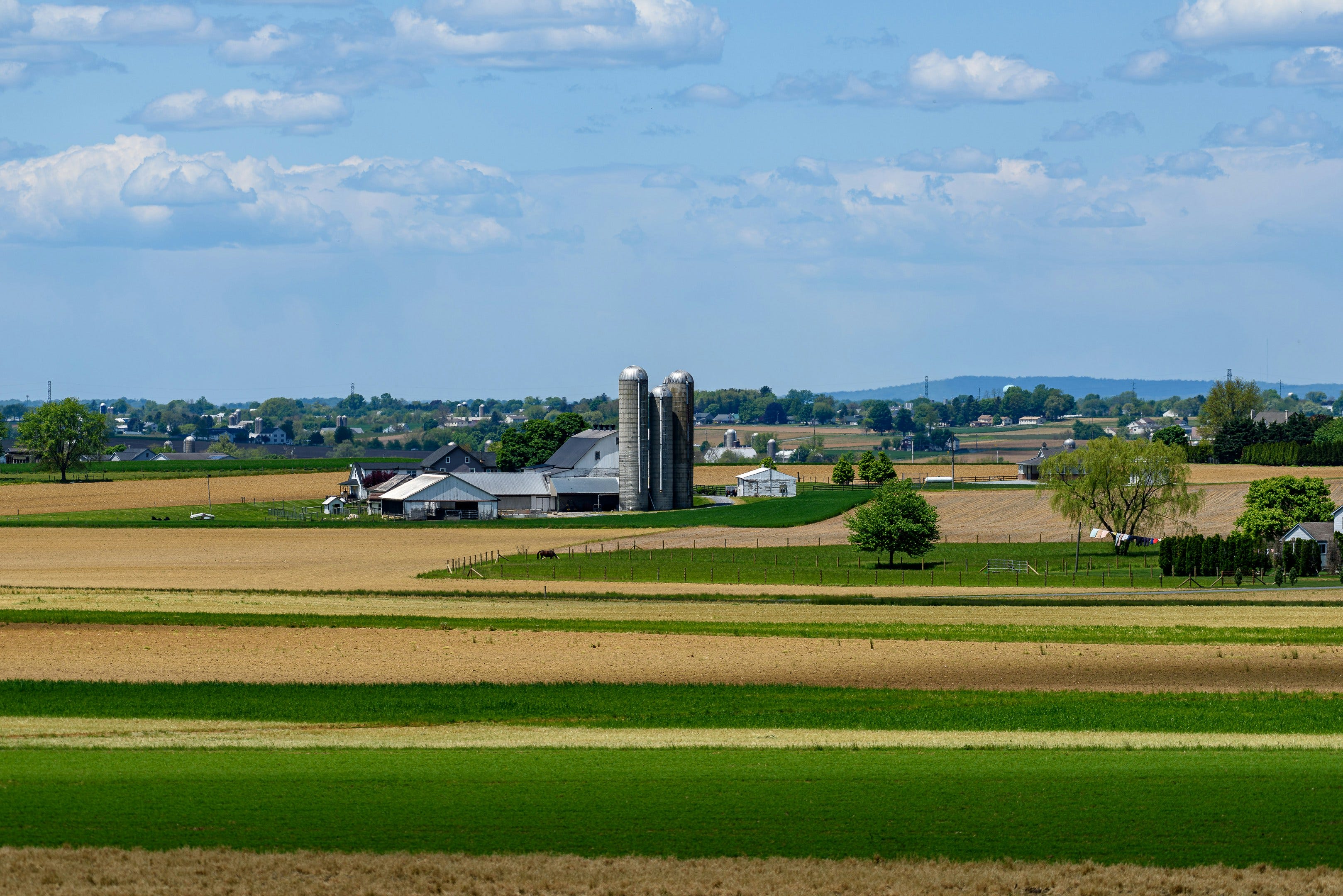
In thinking about the anger prevalent in many Amish or Mennonite homes, I’m struck by an odd contradiction: Plain people are lauded by outsiders as being peaceful, conducting a calm and simple way of life, connected to family, land, and community. And yet—the scattershot of rage punches through this idyllic picture. Bruises on a child’s legs. Holes in the drywall. Broken broom handles. These are the marks of a father’s (or mother’s) anger. In other homes, it’s the raised voice (or the very quiet voice), the name calling, or the simple edge of disdain in a scathing remark. All of it leaves a mark. And yet, these things are hidden. We are known as nonviolent, peaceful people, yes?
M, who grew up in the Weaverland conference, shares that her parents “yelled, slammed doors, or [threw] things, but we sure didn’t let other people see or hear that behavior.” She observes that in public, it is “not seen as acceptable” to express anger in Mennonite circles, even in non-harmful ways.
Linda shares a similar experience. “My father turned red, used bad language, and threw things or hit things. It was a daily occurrence and we learned very quickly to run if we saw or heard rage. My mother used her words to tear down when she was angry.” Anger, as she experienced it in childhood, was “readily displayed in private, and rarely, if ever, in public.” Jenn, who joined the Mennonites at 18, also comments wryly on this public persona: People at her church have a “fake smile and pretend to be happy. I feel like everyone stuffs their emotions in an unhealthy manner – until everyone blows up, [and] then there is another church split.”
Outer peace, inner chaos. Mennonite congregations boast a stoicism rooted in both cultural heritage and in belief, a stoicism that trembles to hold still its outer face while our humanity heaves and quakes underneath. Our beliefs about anger are all mixed up: Some of us believe that it is acceptable to use anger as a whip, controlling those we see as lesser. Others of us believe we don’t have the right to be angry at the hurts and harm raining down over our heads.
For those in social positions with more power, these mixed-up beliefs translate to a lack of accountability, no invitations to genuine repentance, and sometimes an outright refusal of their peers to call out anger that harms the vulnerable. And when someone vulnerable asks for help, finally stripping off the mask of “everything is fine,” they receive little to no support.
Joy tells me her mother did ask for help, after years of her children being beaten in rage by their father: “She would beg dad to quit spanking. Because he would hit, he would hit in rage, in so much anger, and I don’t think he realized how hard he hit. But mom had to back off, [because] dad would get mad at her. . . . [She] went to her parents, and she shared about her problem with dad, and this is what she was told: ‘You made your bed, and now you have to lie in it.’”
Jenn, too, asked for help, telling the leaders in her Mennonite church about her abusive marriage. But instead of receiving help, she was blamed and shamed. “[My husband] has rage and I am required to give grace. He is physical and I am required to keep my head up. However, if I show any emotion out of line I am not being submissive enough . . . . I used to be one to stand up for myself. Now I am silenced. I am degraded. [I am] told I am not submissive. My perspective does not matter. In fact, one time I was asked what I did to deserve it.”
Jenn’s comment, “If I show any emotion out of line, I am not being submissive enough,” demonstrates the flipside of this anger equation. Whereas the powerful (parents, predominantly men) can unleash their anger on their families in private, for the socially powerless (typically women and children), anger is not acceptable to show or feel at all, in public or in private.
Mary grew up Old Order Amish. When asked if her parents gave any guidance for how to positively express anger, she replied emphatically: “Absolutely not. Any expression of anger was punished.” She went on to punish some of her younger children “for expressing anger and frustration,” which grieves her now. “I know I was doing what I was taught to do, but it still breaks my heart for my precious babies.”
Those who do find themselves in abusive family relationships also point out that any expression of their own anger, however justified, can be weaponized against them. After Melanie’s dad became abusive in midlife, “Any emotion of anger [that I showed] became the unspoken sign that he had won whatever it was I was trying to speak up about.”
Louise concurs with this experience. Her dad used his children’s frustration as a tool against them: “There was a period of time where he would stay just dead calm, and when we were upset, he’d be like all self-righteous, because he’s not angry, he’s not upset, we’re the ones that have a problem, just look at us, we’re losing our tempers!”
Melanie also experienced this type of manipulation in a church setting. The leaders had Mennonite and Brethren backgrounds and were extremely controlling. “Any emotion they deemed negative gave them spiritual superiority and made you trash to be discarded . . . all while [they were] pretending to be wise counselors.”
So—we hide our anger. We suppress our anger. We don’t hold those accountable who demonstrate destructive anger. We use the anger of victims to question their experience and their integrity. How in the world do we begin to grapple with our anger and to redeem the horrific experiences that we hold both collectively and personally? How do we engage with anger positively instead of letting our rage consume the people closest to us, or conversely, telling ourselves to “stuff it” and stay calm and controlled at all times? (If you’re human, you know this doesn’t work).
In 1981, the writer and civil rights activist Audre Lorde addressed the crowd at the National Woman Suffrage Association. Her speech centered on anger, specifically within the context of confronting racism, but her words apply to our experiences of anger universally. “We cannot allow our fear of anger to deflect us nor to seduce us into settling for anything less than the hard work of excavating honesty . . . . When we turn from anger we turn from insight.” Can I invite you into this hard work of honesty?
I have been afraid of anger for a long time, beginning in my youngest years with my terror of my father and his anger, and then continuing on to my deep discomfort with the anger I felt towards my father and his cruel behaviors. And while this fear has acted as a self-protective alarm system, pulling me away from danger when necessary, I also sense the truth in Lorde’s statement: “My fear of anger taught me nothing.” Or maybe, what it has taught us is not the truth? Examination, exploration—renovation, even—of our anger as Anabaptist people is long due.
I think it may help to start with this question: What lies behind anger? Think of the people you might know whose anger became abusive. What makes them angry? What motivates that anger? Think of a moment you were angry. Why were you angry?
In the next part of this series, I will explore what beliefs and emotions might underscore anger, or conversely, suppression of anger, especially in Plain circles. Hopefully this second part will be coming out here in the next few weeks!
I identify with so much of this, having lived with verbal and emotional abuse. This really resonates with me. There is so much hypocrisy going on with the supposed "quiet, peace-loving" Anabaptists. I can't wait to read more of your work.
I've heard so many stories..
It's difficult NOT to be cynical about EVERY 'Christian' couple I meet. "So what's happening behind YOUR doors?"
However, I was not a confident mom and I had my own issues with anger, insecurities, lack of support in the home.. I'm so thankful my children love me.